 |
 |
Operating System
Android 7.0 (Nougat)
Android 8.0 (Oreo)

|
|
| Accelerometer | |
| Gyroscope | |
| GPS | |
| A-GPS, GLONASS | A-GPS, GLONASS, BDS, GALILEO |
| Fingerprint Scanner | |
| Iris Scanner | |
| Magnetometer | |
| Proximity | |
| Thermometer | |
| Other | |
| compass | barometer, compass, heart rate |
| NFC | |
| WiFi | |
| WiFi Direct | |
| Bluetooth | |
| 4.2 | 5.0 |
| USB | |
| microUSB 2.0, USB On-The-Go | 3.1, Type-C 1.0 |
| Other | |
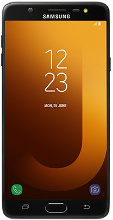
Samsung Galaxy J7 Max cell phone of Samsung company was released on June 2017.
We could see here os, version Android 7.0 (Nougat). SIM card socket – we are able to notice here is Nano-SIM.
Carrying on, it is possible to see the info regarding screen. That item guarantees us with screen size of 5,70 inches and resolution is 1920x1080 with quantity of pixels per inch mounting at 386 ppi.
Even as we read further one, you will find characteristics of two, rear and front cameras. Here, we ought to draw our focus on how many MP in primary and additional camera is. Samsung Galaxy J7 Max gives us 13,00 MP primary and 13,00 MP secondary camera. The resolution for video recordings is 1080p@30fps. Too bad it doesn’t have Optical Zoom.
Just one more element that's crucial for the efficiency of the telephone is its processor. The manufacturers offered us with Octa-core (4x2.35 GHz Cortex-A53 & 4x1.65 GHz Cortex-A53).
Following the processor speed, you can look at memory characteristics. It offers both RAM in addition to storage memory. The free space is 32,00, and RAM is 4 GB RAM. Samsung Galaxy J7 Max offers external memory access. It provides us with microSD, up to 256 GB (dedicated slot) memory.
Battery is another section. Within, we are able to see it provides us with 3300 mAh. It is very important for the duration of the telephone being online. Battery is not removable.
Just one more elements are physical attributions of the smartphone. Dimensions include weight, depth, and in details there's also height and width. In here the following data: 179,00 g weight, 8,10 mm depth, 156,70 mm height, 78,80 mm width.
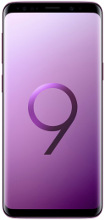
Samsung Galaxy S9 was one of the very wanted telephones. It absolutely was also the main product of Samsung company. It was released on March 2018.
We are able to see here os, version Android 8.0 (Oreo). SIM card socket – we can see here is Nano-SIM.
Moving further on, it is possible to see the information regarding display. That model ensures us with display size of 5,80 inches and resolution is 2960x1440 with number of pixels per inch mounting at 568 ppi. The kind of screen protection found in the model is Gorilla Glass 5.
Once we read further one, there are specifications of two, rear and front cameras. Here, we must draw our awareness of the number of MP in primary and additional camera is. Samsung Galaxy S9 offers 12,00 MP rear and 8,00 MP front camera. The resolution for video recordings is 2160p@60fps, 1080p@240fps, 720p@960fps. Unfortunately it doesn’t have Optical Zoom.
Another element that's essential for the optimization of the telephone is its processor. The authors provided us with Octa-core (4x2.7 GHz Mongoose M3 & 4x1.8 GHz Cortex-A55) / EMEAOcta-core (4x2.7 GHz Kryo 385 Gold & 4x1.7 GHz Kryo 385 Silver) - USA & China.
Following the processor speed, you can see the memory details. It includes both RAM along with storage memory. The free media space is 256,00, and RAM memory is 4 GB RAM. Samsung Galaxy S9 has external memory access. It provides us with microSD, up to 400 GB memory.
Battery is next section. Within, we can see it offers 3000 mAh. It is very important for the time of the telephone being online. Battery is not removable.
Another elements are physical attributions of the smartphone. Dimensions include weight, depth, and in extra info there are also height and width. We cam see here the following details: 163,00 g weight, 8,50 mm depth, 147,70 mm height, 68,70 mm width.